
TRAINING SESSIONS
The project has developed several Information Products that integrate data from multiple sources (see here a detailed list of technologies) into outputs that can directly support biodiversity policy implementation through marine management and conservation decisions.
The following training sessions are being organized:
- 9th of October 2026 13–15:00 CET Opportunities and limitations of emerging marine monitoring approaches: drones, satellites
- 26th of October 2026 13–15:00 CEST Emerging approaches for phytoplankton monitoring and detecting harmful algal blooms
- 27th of October 2026 10:00–12:00 CEST (Copenhagen); 11:00–13:00 EEST (Helsinki) SESSION ON USING EMERGING IMAGING TECHNOLOGIES FOR MORE EFFICIENT AND STANDARDISED MARINE MONITORING
- 30th of October 2026 13:00–15:00 CET SPECIES DISTRIBUTION MODELS, HABITAT MAPPING AND CONSERVATION PLANNING
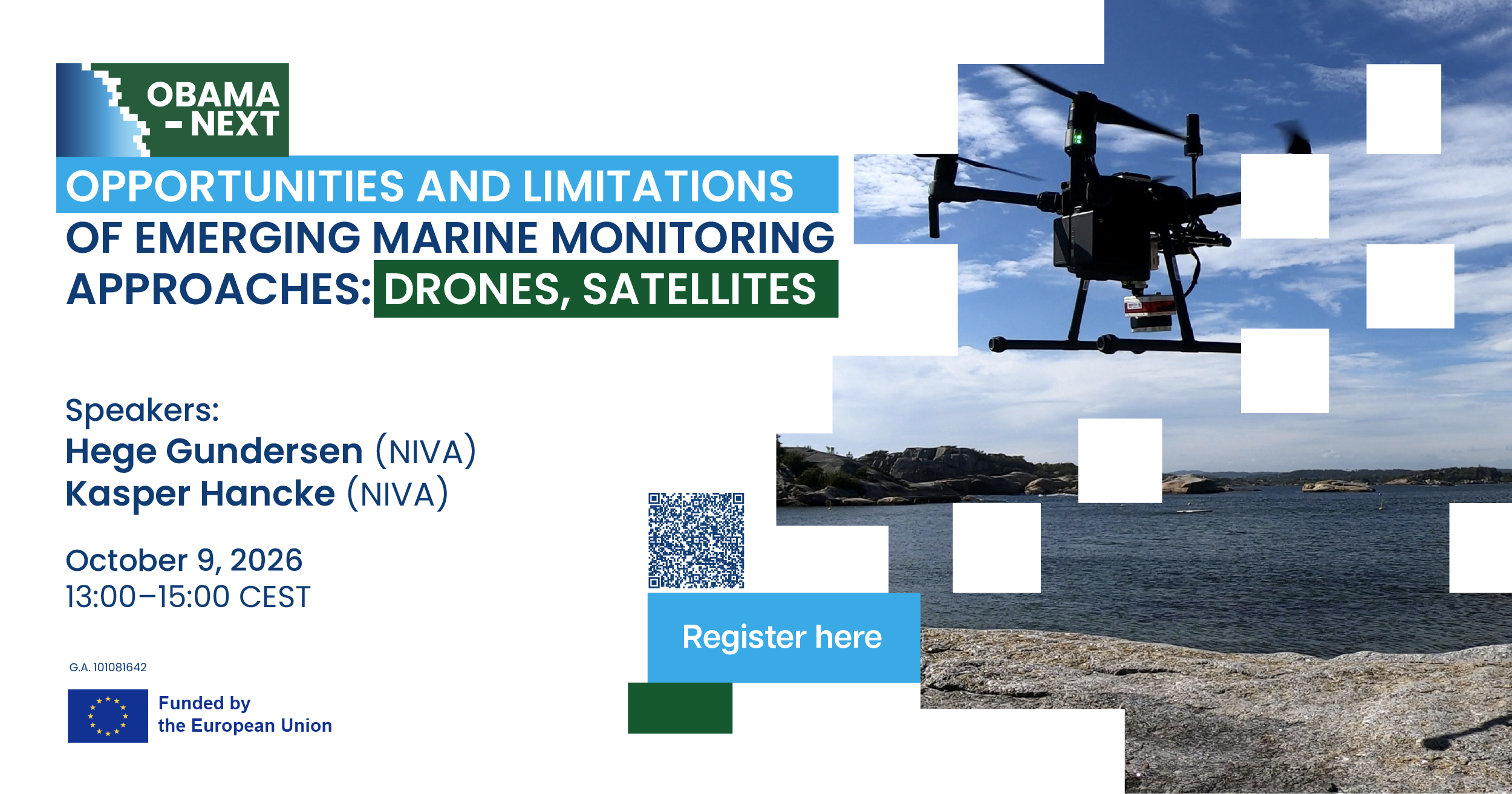
9th of October 2026 13–15:00 CET
Opportunities and limitations of emerging marine monitoring approaches: drones, satellites
Emerging technologies and approaches such as drone-based remote sensing, satellite observations, combined with artificial intelligence and machine learning are increasingly being used to complement conventional marine monitoring programmes. However, less is known about where these approaches provide the greatest added value, what are their requirements and limitations, and how they can be integrated into existing monitoring activities. OBAMA-NEXT (Observing and Mapping Marine Ecosystems – Next Generation Tools) project invites you to this online session to gain practical insights into the uses of drones and satellites.
This session explores how emerging monitoring technologies can complement existing monitoring programmes and improve data collection. Through examples from habitat mapping, species monitoring and object identification, participants will gain an overview of:
- practical applications and strengths of these technologies;
- requirements (including expertise, equipment and conditions) and limitations;
- technical details;
- examples of outputs and their interpretation;
- validation needs;
- cost, effort and scalability;
- transferability across regions and technology readiness level;
- policy and management relevance.
Who should attend? This session is intended for marine monitoring practitioners, national and regional competent authorities, environmental managers, Regional Seas Conventions experts, environmental consultancies and scientists interested in the practical application of emerging monitoring technologies.
Additional information:
Deliverable 7.3 https://zenodo.org/records/20185258
EMODnet https://data.openearth.nl/obama-next/
GitHub: https://github.com/OBAMANEXT
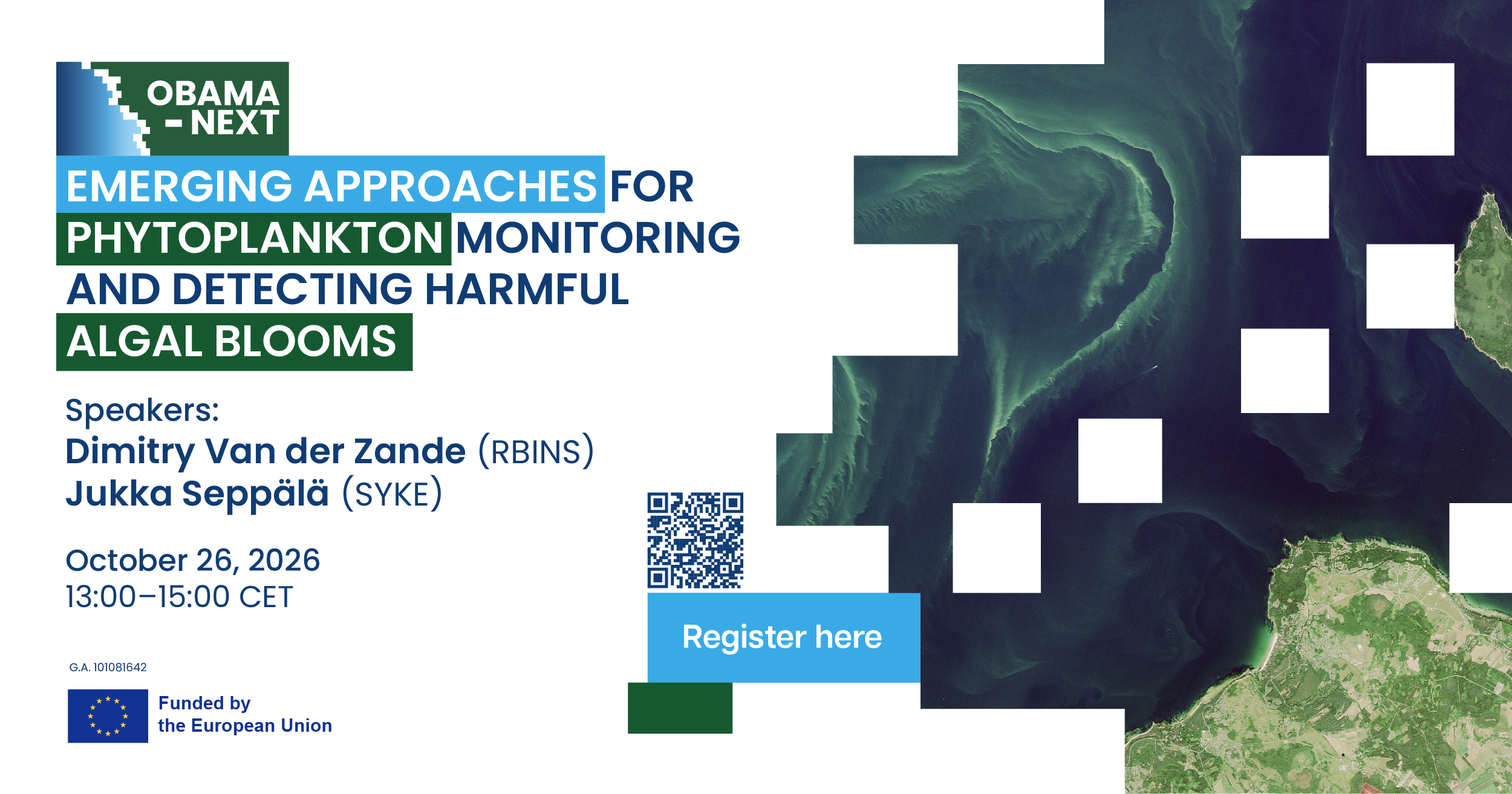
26th of October 2026 13–15:00 CET
Emerging approaches for phytoplankton monitoring and detecting harmful algal blooms
The OBAMA-NEXT (Observing and Mapping Marine Ecosystems – Next Generation Tools) project invites you to an online session exploring emerging approaches for phytoplankton monitoring and harmful algal bloom detection.
The session will introduce innovative approaches for monitoring phytoplankton dynamics and eutrophication, assessing water quality, and supporting the early detection of harmful algal blooms (HABs) in marine ecosystems. The session will demonstrate how satellite observations, autonomous monitoring systems and high-frequency in situ observations can complement conventional monitoring programmes by improving spatial and temporal coverage and provide early warning of HAB events.
Participants will gain insights into practical applications, requirements, limitations and strengths, outputs and their interpretation, as well as transferability across regions, policy and management relevance.
Who should attend? This session is intended for representatives of monitoring agencies and competent authorities, environmental assessment experts, marine and coastal managers, experts from Regional Seas Conventions, environmental consultancies, and other scientists involved in marine monitoring and assessment, including those working on phytoplankton and detection of HABs.
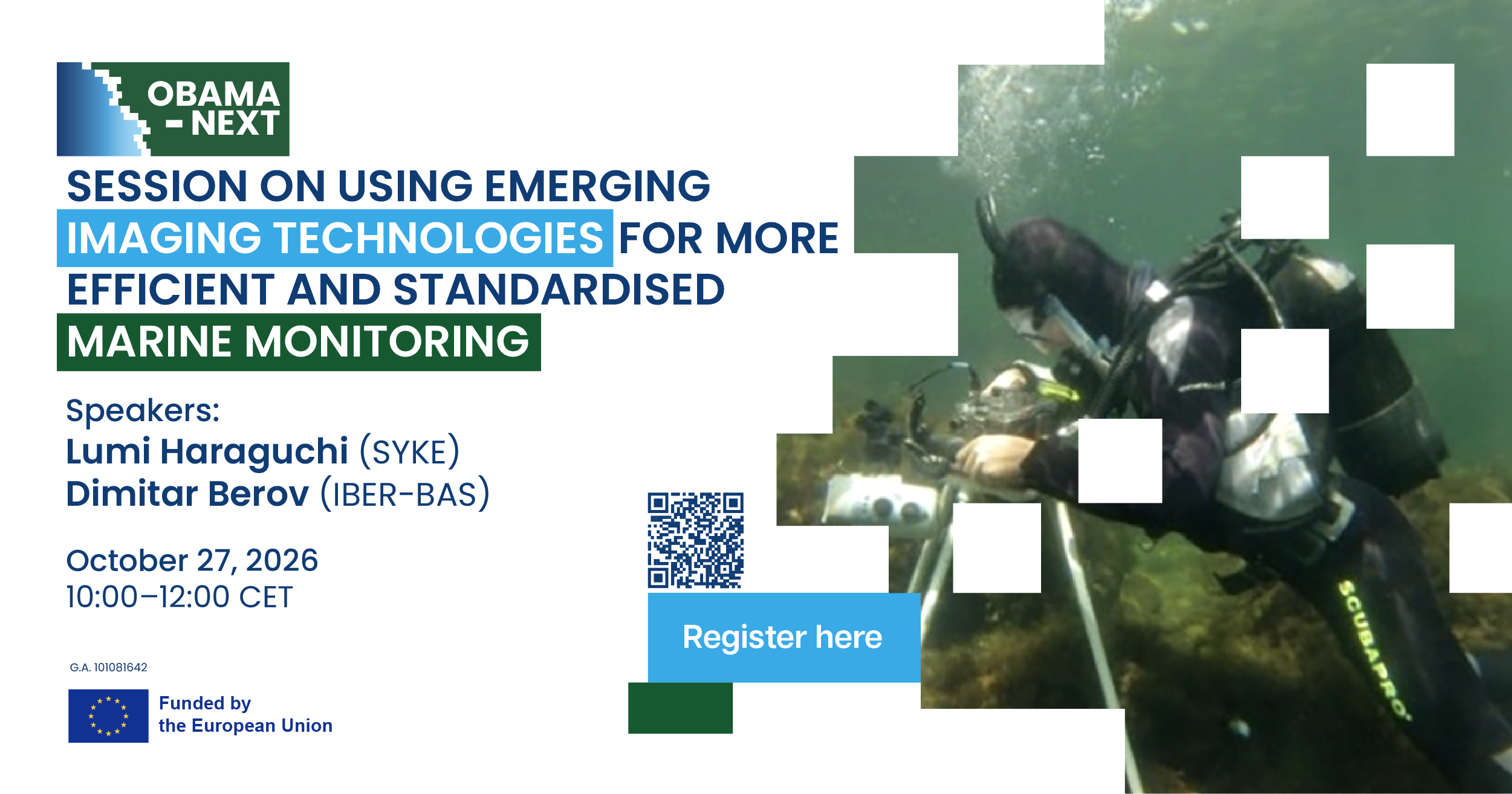
27th of October 2026 10:00–12:00 CEST (Copenhagen); 11:00–13:00 EEST (Helsinki)
Session on using emerging imaging technologies for more efficient and standardised marine monitoring
This session provides an overview of how image-based observation methods and automated data processing can support the future of marine monitoring. Through two case studies, the presenters will demonstrate:
1) How underwater imagery and 3D photogrammetry can be used for non-destructive biomass estimation and habitat monitoring.
2) How harmonised image labelling and collaboration among taxonomic experts can improve the comparability of image-based observations and facilitate the integration of imaging technologies into monitoring programmes.
Speakers: Dimitar Berov (IBER–BAS), Lumi Haraguchi (SYKE).
Date: October 27, 2026
Time: 10:00–12:00 CEST (Copenhagen); 11:00–13:00 EEST (Helsinki).
Platform: Online (MS Teams); the link will be provided upon registration.
The session will focus on helping potential users to understand when and where these approaches may be useful, what expertise and data are required, what challenges should be considered, and how the information products can contribute to future monitoring and assessment programmes.
Who should attend? scientists, specialists, monitoring organisations and specialists, technical experts involved in marine biodiversity monitoring, data managers, other EU projects, competent authorities, environmental assessment experts, consultancies.
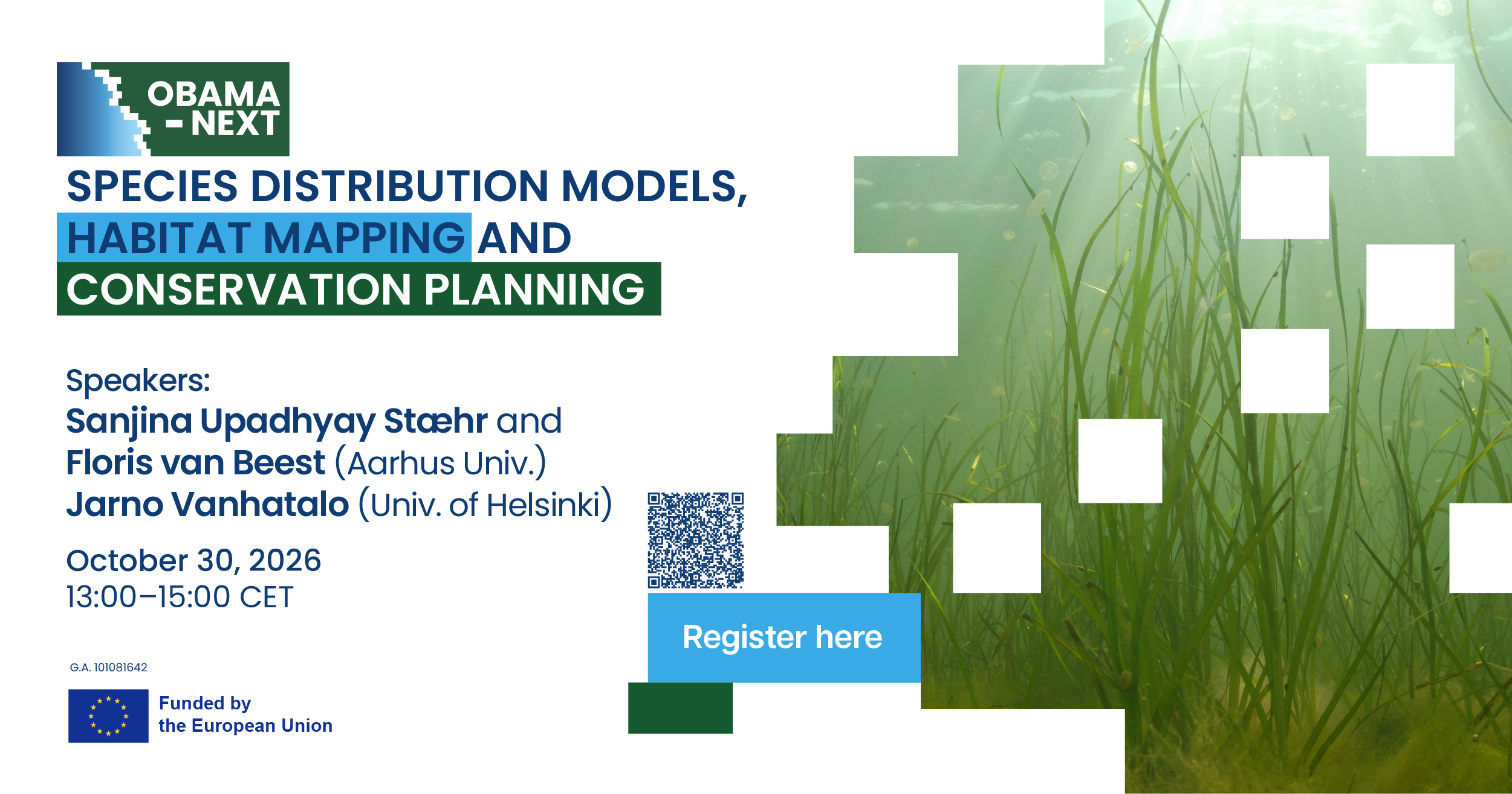
30th of October 2026 13:00–15:00 CET
Species distribution models, habitat mapping and conservation planning
The session will explore how species distribution models (SDMs) and habitat suitability maps can support evidence-based decision-making in marine conservation and spatial planning.
Through practical examples, the session will demonstrate how long-term monitoring data, remote sensing products, expert knowledge and advanced statistical models can be integrated to map species, communities and habitats (including seagrass, marine mammals and fish), assess restoration potential (e.g., seagrass), and identify priority areas for conservation.
Who should attend? The session is intended for competent authorities responsible for biodiversity conservation, marine protected area managers, wildlife managers, marine spatial planners, habitat restoration practitioners, environmental consultancies, environmental monitoring experts, regional authorities, other EU-funded projects, researchers and all interested parties in the practical application of species distribution models.
