
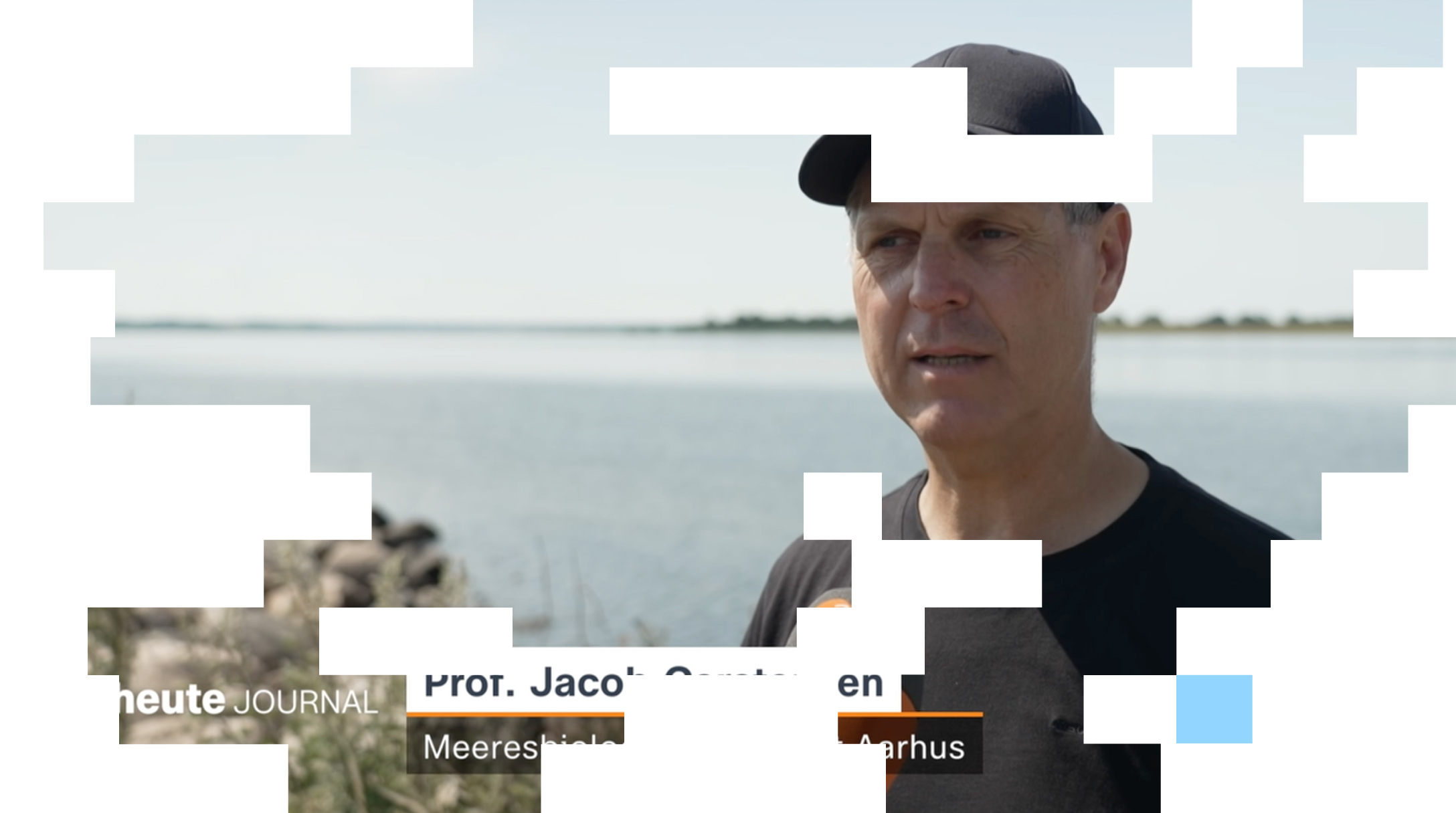
OBAMA-NEXT coordinator discusses Baltic Sea dead zones in ZDF news interview
OBAMA-NEXT Project Coordinator Jacob Carstensen, from Aarhus University, was interviewed by German public broadcaster ZDF for a report examining the environmental state of the Baltic Sea.
The interview addressed the expansion and ecological consequences of oxygen-depleted areas, commonly known as dead zones, alongside the combined effects of eutrophication and climate change. It also considered measures taken in Denmark to improve marine environmental conditions.
The interview was developed in the context of heatwaves in Germany and examined what rising water temperatures mean for marine plants, animals and people. It also explored why the ecological condition of the Baltic Sea remains a concern despite decades of cooperation under the Helsinki Convention.
During the interview, Carstensen explained that the term “dead zone” does not mean that an area is entirely devoid of life. Instead, it describes severe oxygen depletion that prevents most animals from surviving, while bacterial communities may remain.
The interview highlighted different consequences of hypoxia and eutrophication. These included sulphur bacteria covering oxygen-depleted sediments, benthic animals emerging from the seabed as oxygen levels fall, dead fish and crabs, and eels attempting to escape low-oxygen waters, among others. Excess nutrients can stimulate algal growth, reduce the light available to eelgrass and encourage fast-growing organisms to cover the plants, transforming healthy underwater meadows into bare or degraded seabeds.
The interview was highlighted across three ZDF news programmes:
- heute journal, broadcast on Sunday, 12 July 2026.
- ZDF-Mittagsmagazin, broadcast on Monday, 13 July 2026.
- heute in Europa, broadcast on Monday, 13 July 2026.
The interview highlights the importance of communicating marine ecosystem change clearly and accurately to the public. This is closely connected to OBAMA-NEXT’s objective of turning marine observations and scientific knowledge into accessible information that can support environmental assessment, management and policy.


