INFORMATION PRODUCTS
Information Products
One of the central objectives of OBAMA-NEXT is to transform cutting-edge marine biodiversity observations into practical, policy-relevant Information Products (IPs). These products integrate data from multiple sources (see here a detailed list of technologies) into outputs that can directly support biodiversity policy implementation through marine management and conservation decisions.
Co-design process with practitioners
The IPs are co-designed in collaboration with the Practitioners Advisory Board (PAB), which brings together policy makers, managers, and conservation practitioners from across Europe. This collaborative process ensures that each IP responds to practitioners’ needs and aligns with European policy frameworks, such as the Marine Strategy Framework Directive, the EU Biodiversity Strategy for 2030, and the EU Nature Restoration Law.
The long-term purpose
The ultimate goal of OBAMA-NEXT’s IPs is to provide scientifically sound, policy-driven, actionable knowledge that bridges the gap between advanced marine biodiversity monitoring and effective ocean governance.
OBAMA-NEXT IPs
The project will continuously update this section as soon as more IPs are validated. Below please find a list of the ongoing IPs:
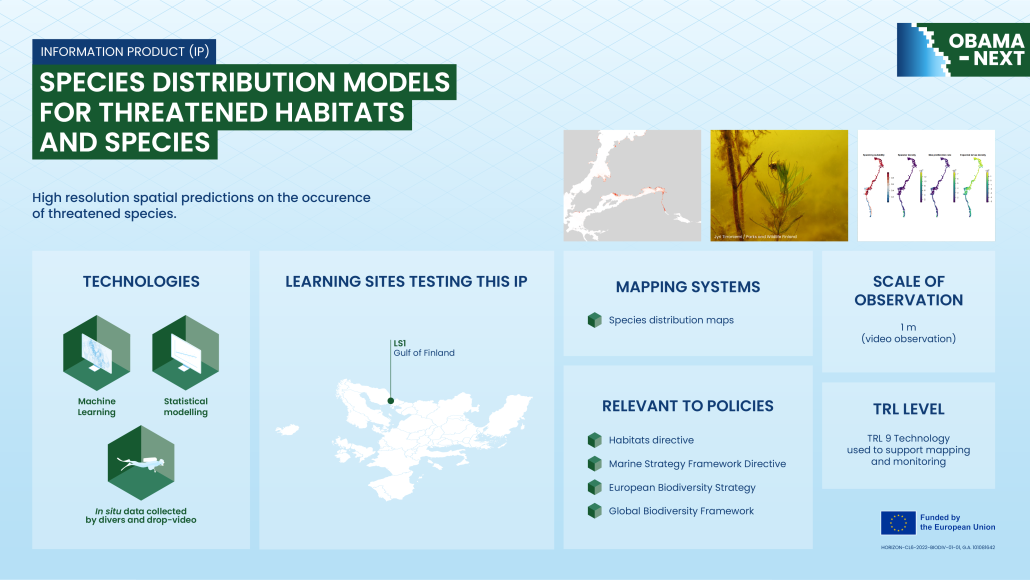
 Species Distribution Models for Threatened Habitats and Species
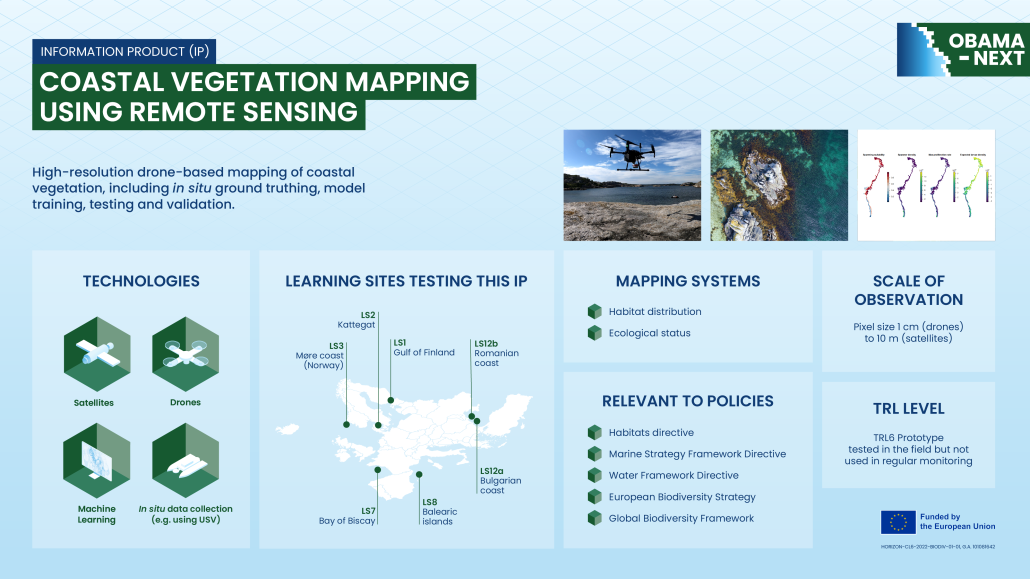
- Coastal Vegetation Mapping Using Remote Sensing
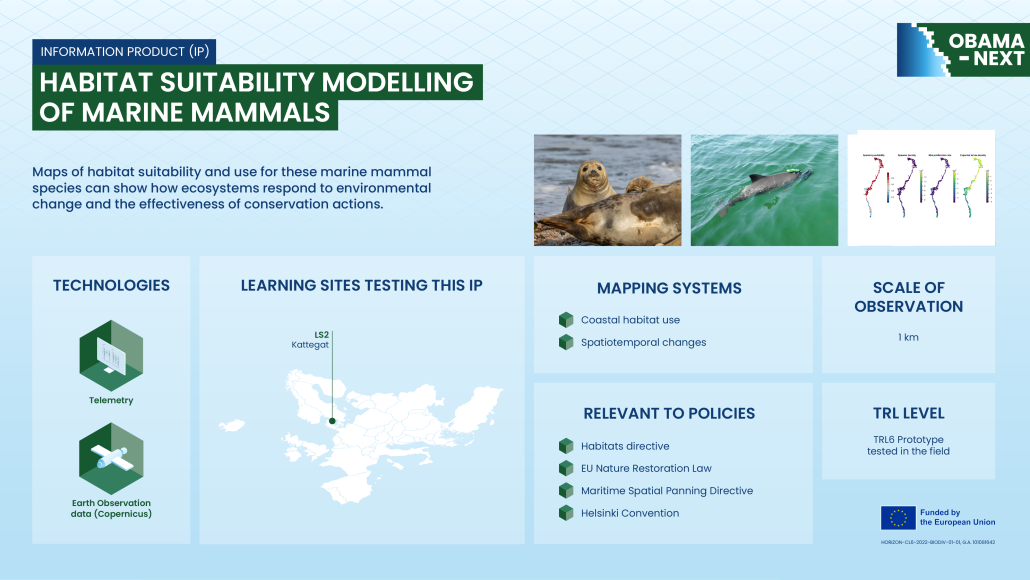
- Habitat Suitability Modelling of Marine Mammals
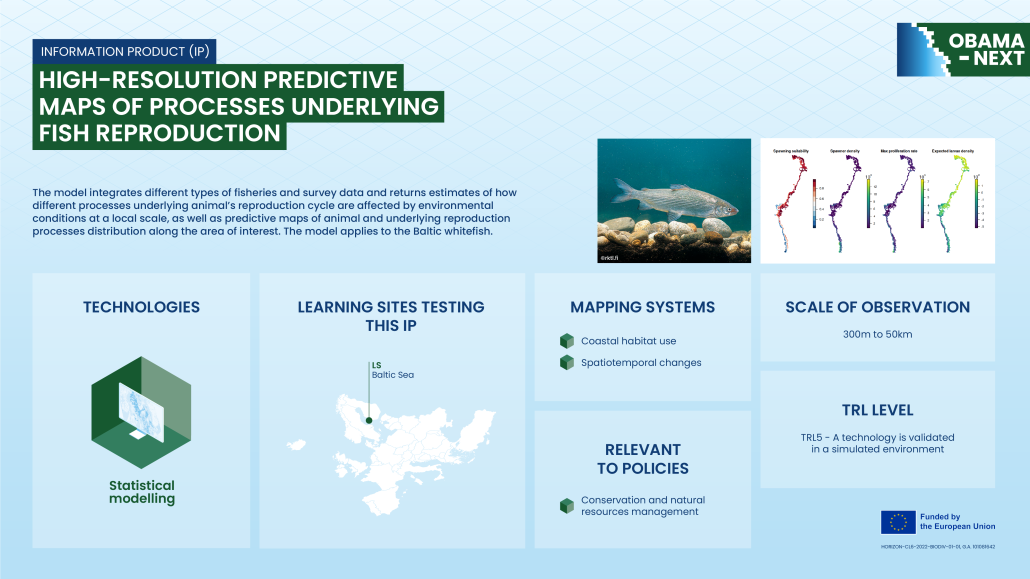
- High-Resolution Predictive Maps of Processes Underlying Fish Reproduction
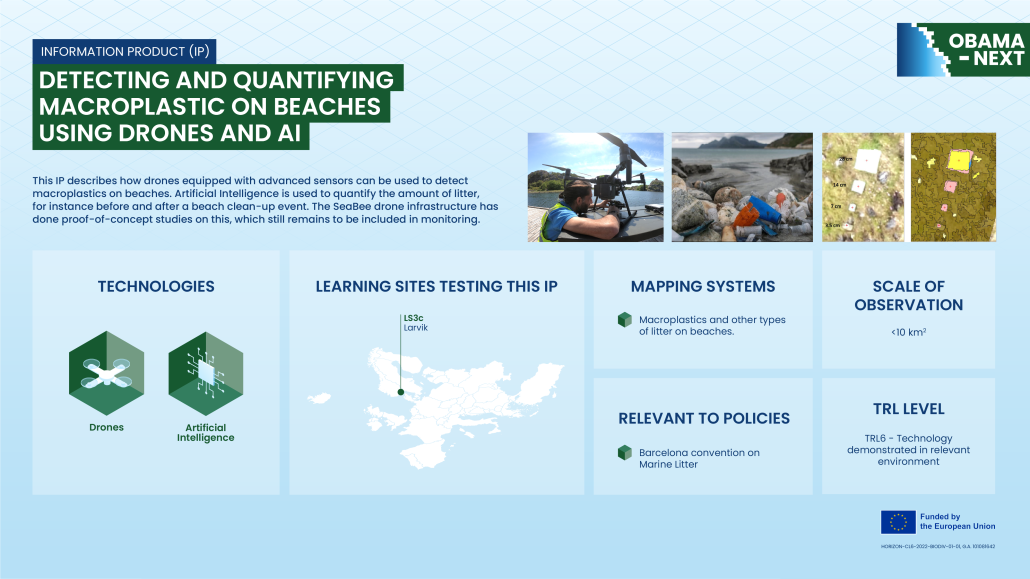
- Detecting and Quantifying Macroplastic on Beaches using Drones and AI
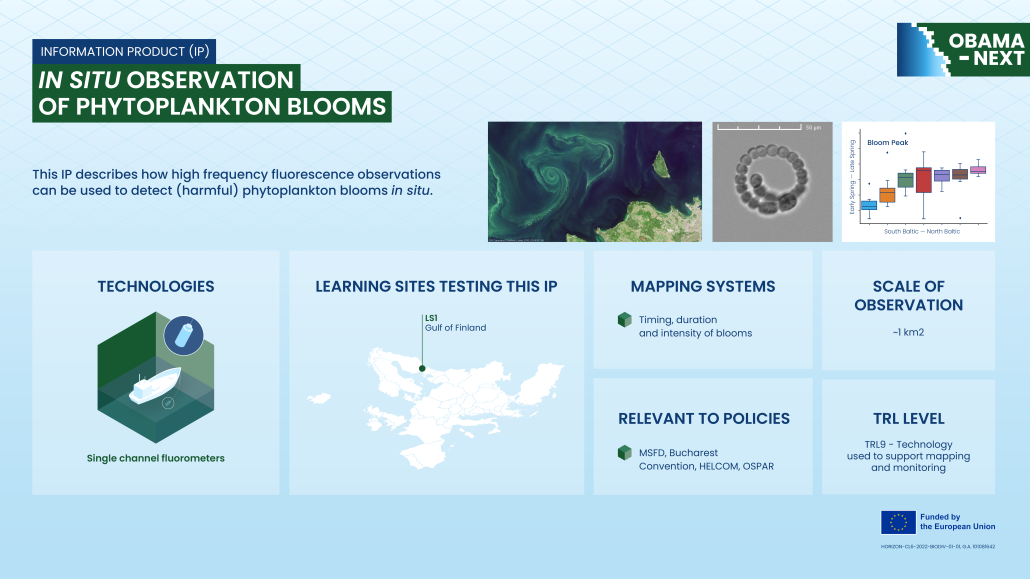
- In situ observation of phytoplankton blooms
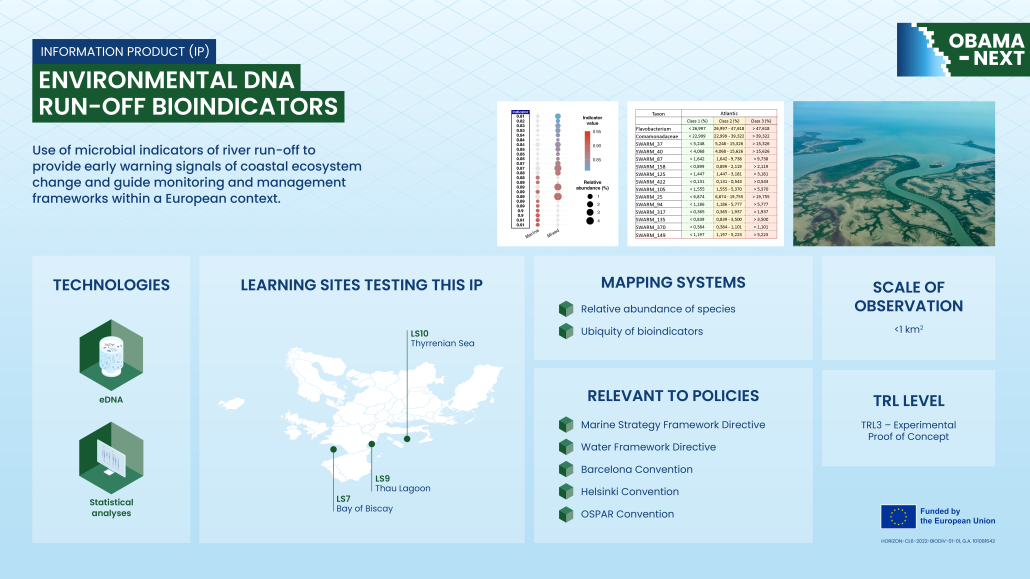
- Environmental DNA run-off bioindicators
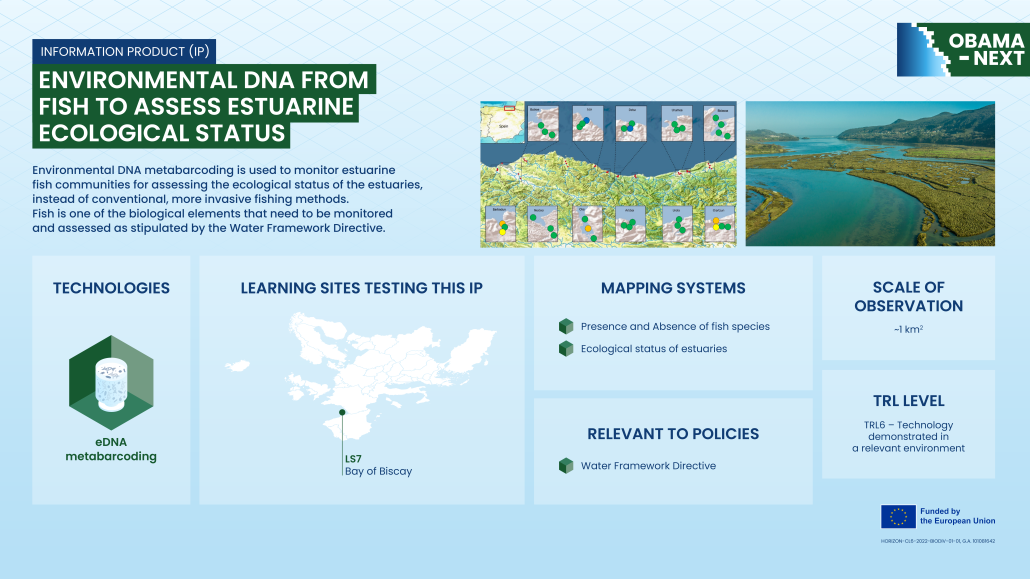
- Environmental DNA from fish to assess estuarine ecological status
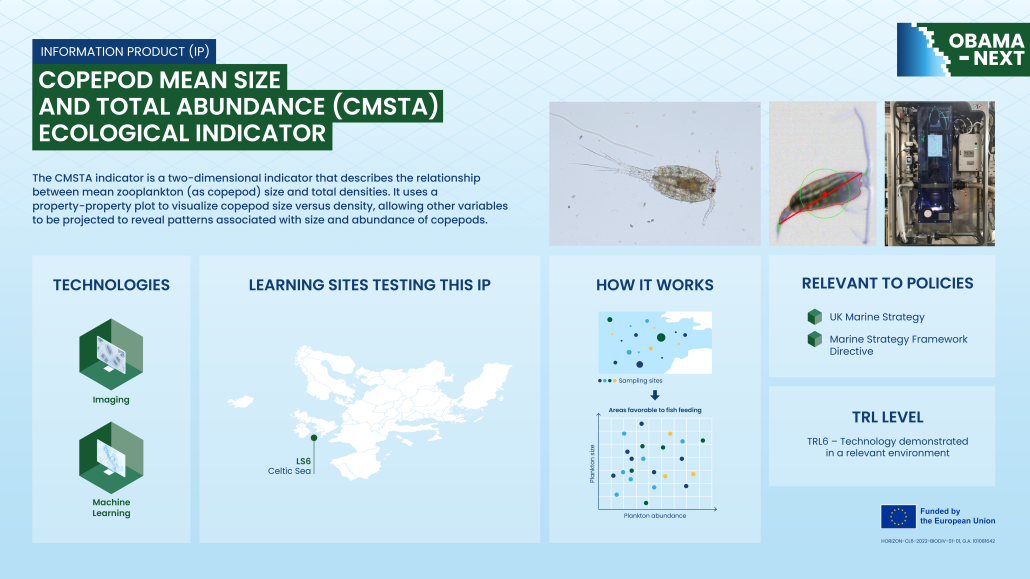
- Copepod mean size and total abundance (CMSTA) ecological indicators
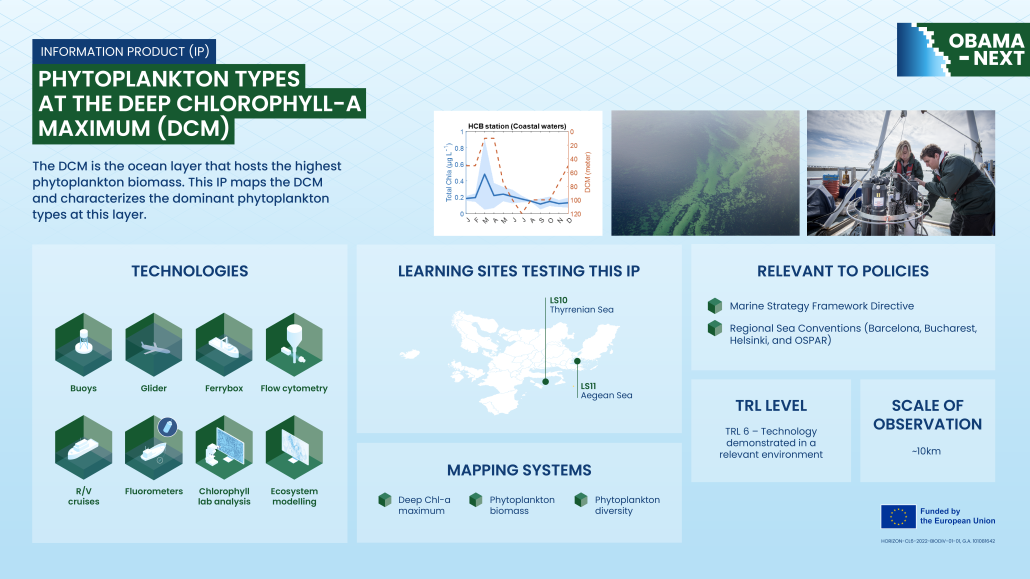
- Phytoplankton types at the deep Chlorophyll-a maximum (DCM)
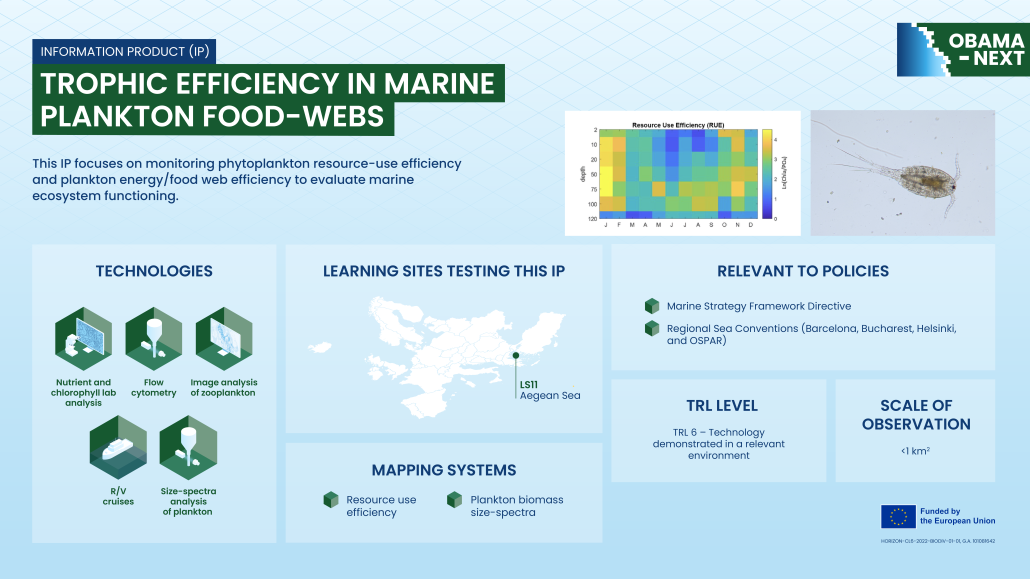
- Trophic efficiency in marine plankton food-webs
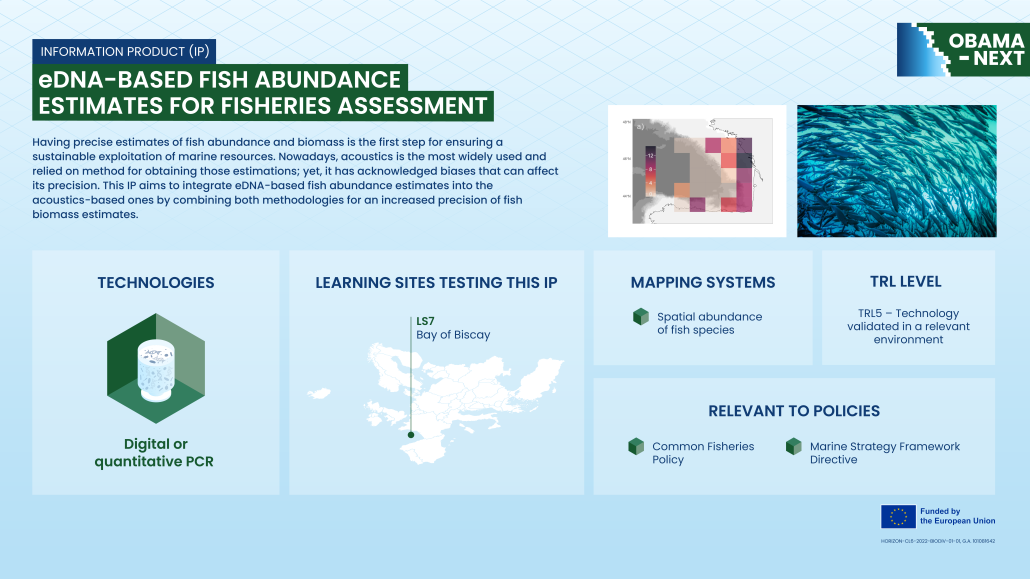
- eDNA-based fish abundance estimates for fisheries assessment
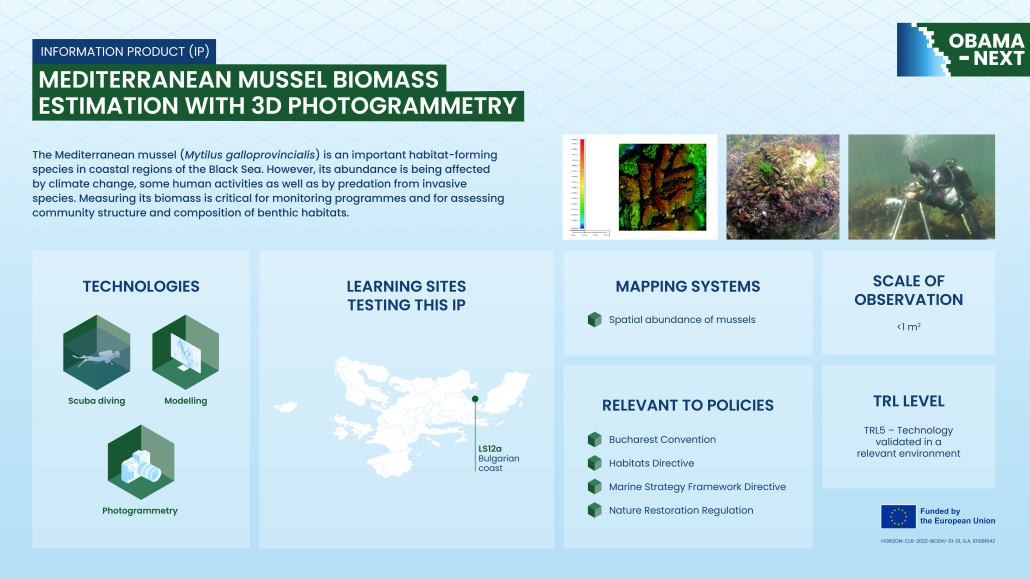
- Mediterranean mussel biomass estimation with 3D photogrammetry
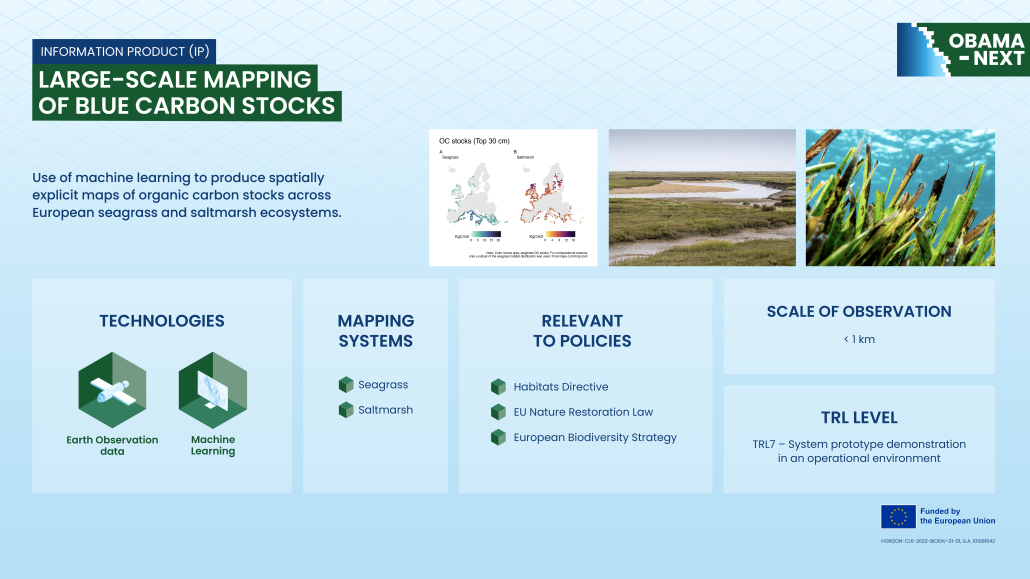
- Large-scale mapping of blue carbon stocks
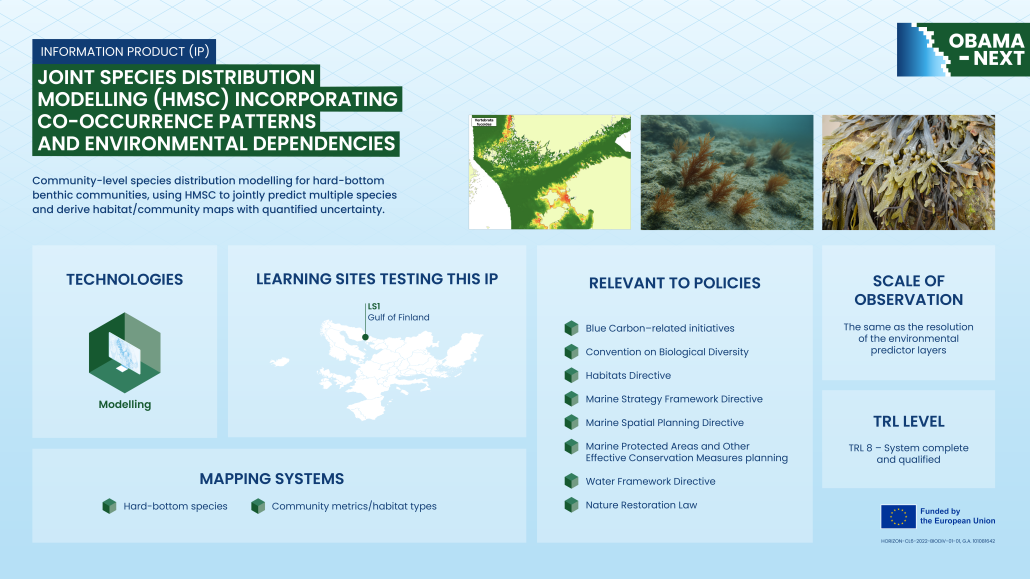
- Joint species distribution modelling (HMSC) incorporating co-occurrence patterns and environmental dependencies
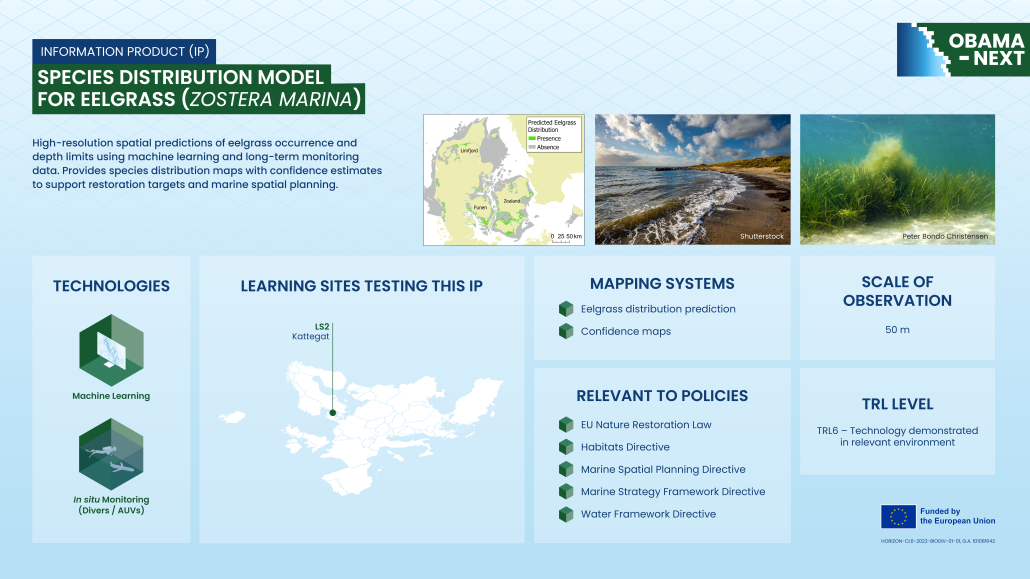
- Species distribution model for eelgrass (Zostera marina)
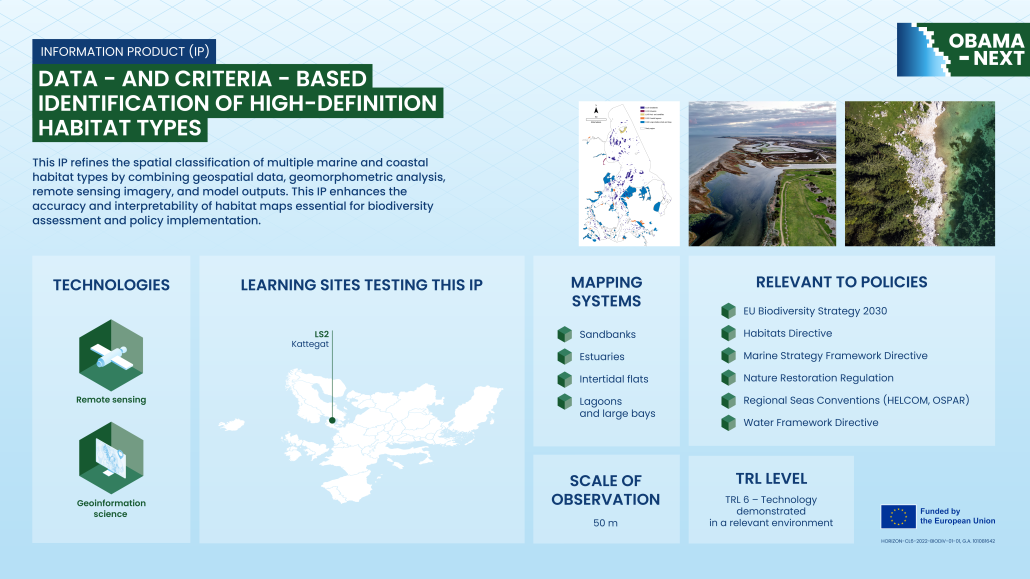
- Data- and criteria-based identification of high-definition habitat types
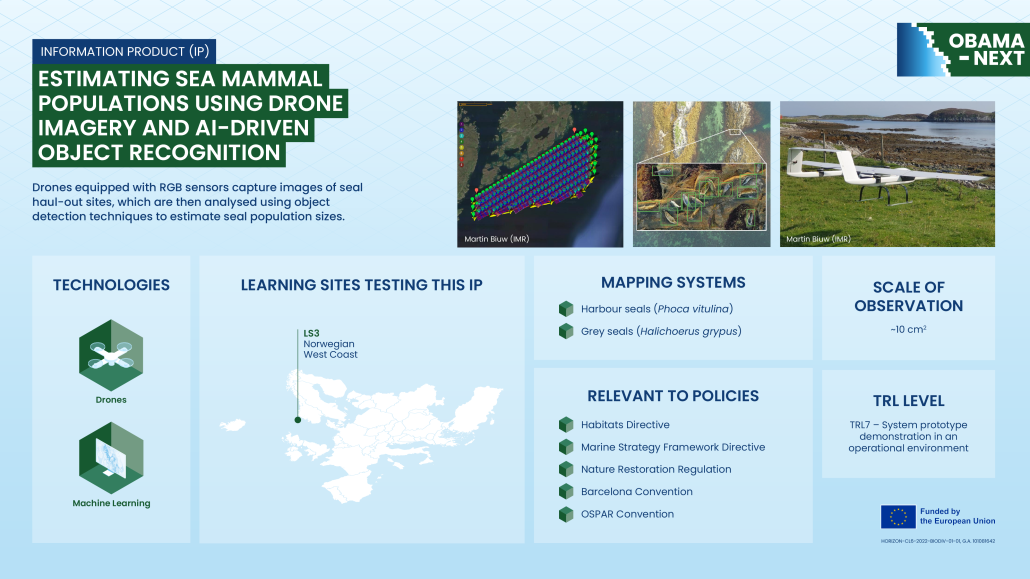
- Estimating sea mammal populations using drone imagery and AI-Driven object recognition
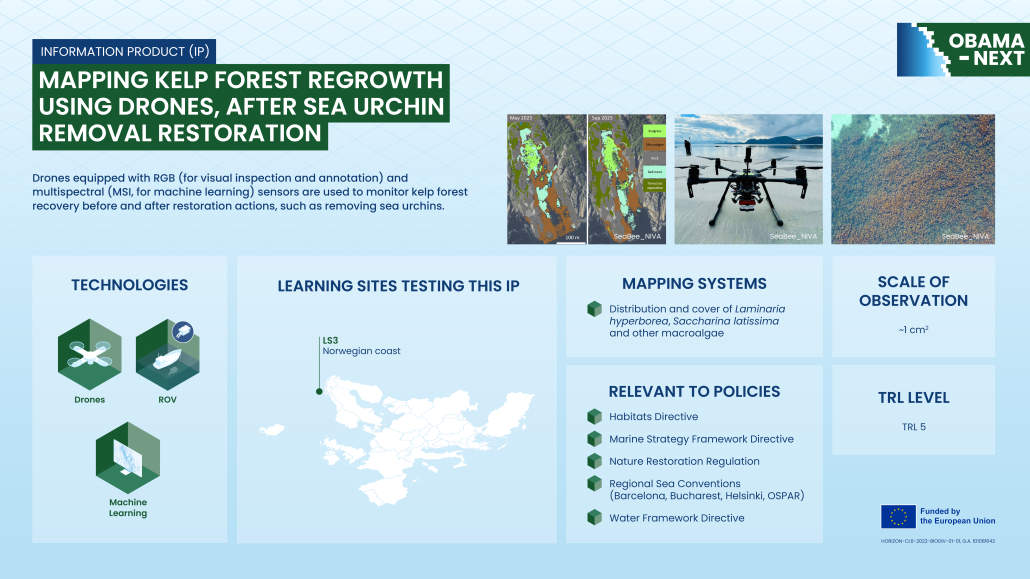
- Mapping kelp forest regrowth using drones, after sea urchin removal restoration
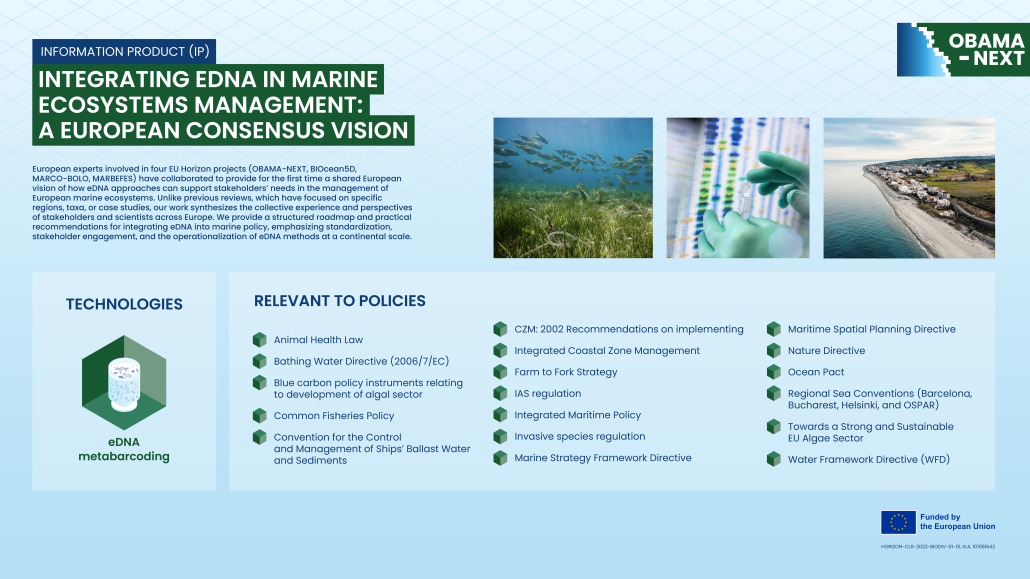
- Integrating eDNA in marine ecosystems management: A European consensus vision
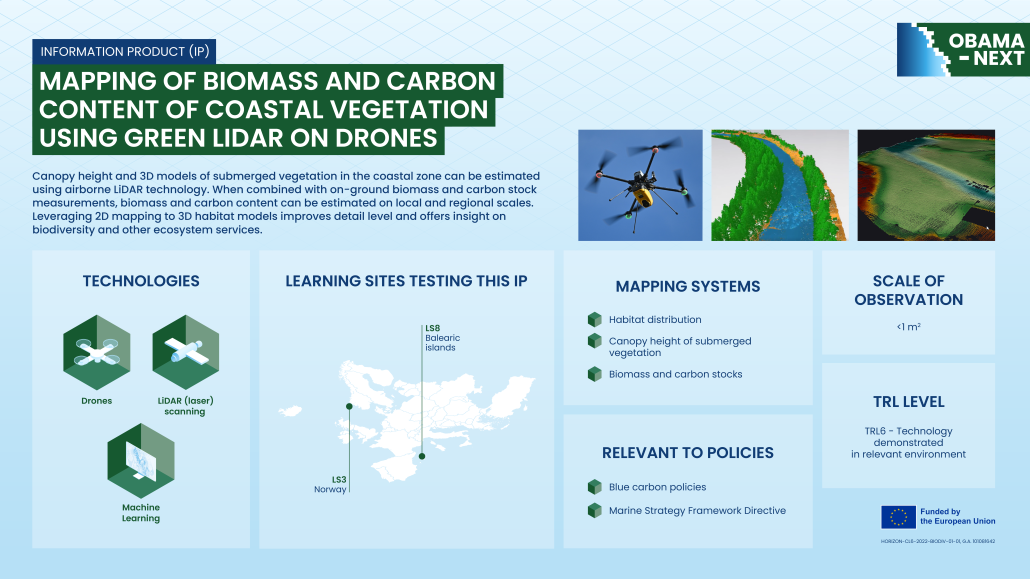
- Mapping of biomass and carbon content of coastal vegetation using green lidar on drones
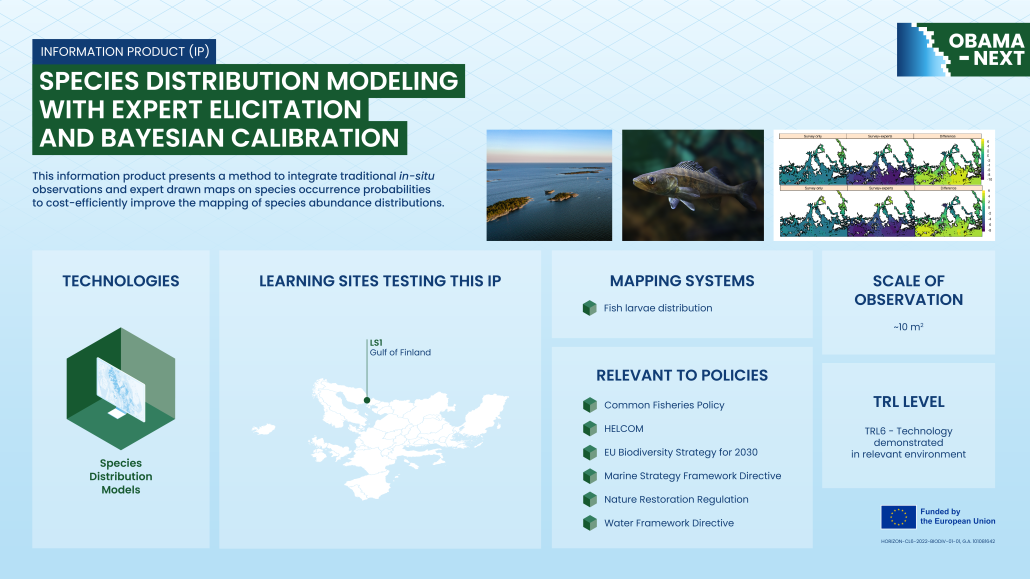
- Species distribution modelling with expert elicitation and Bayesian calibration
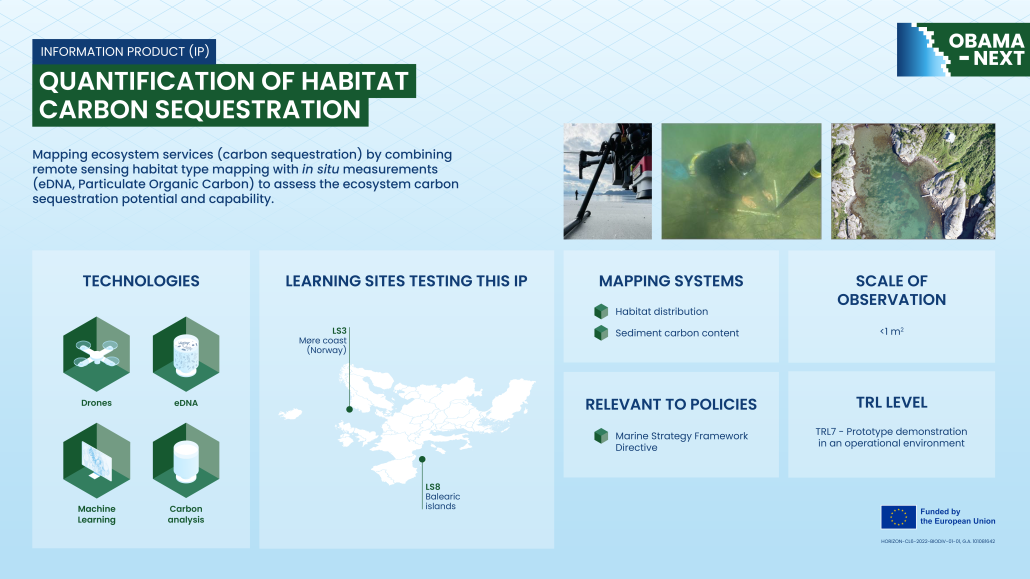
- Quantification of habitat carbon sequestration
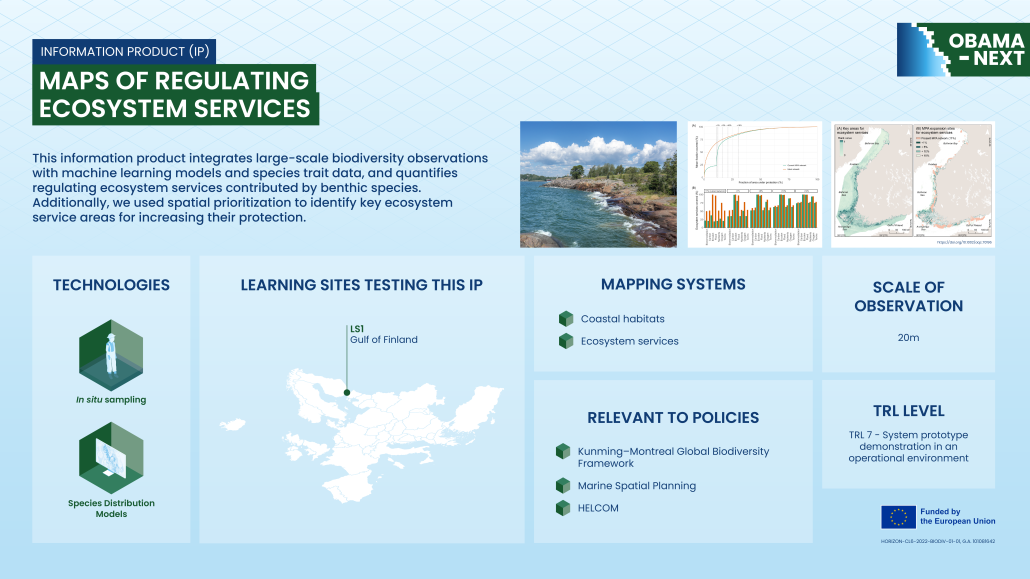
- Maps of regulating ecosystem services